


Introduction
The promise of being your own boss and achieving financial independence is a powerful motivator. It drives thousands of people every year to explore new business opportunities, often referred to in the industry as “bizops.” While many of these opportunities are genuine pathways to success, the landscape is unfortunately cluttered with schemes designed to separate hopeful entrepreneurs from their hard-earned money.
Navigating this terrain requires more than just enthusiasm; it requires a critical eye and a structured approach to due diligence. Identifying a legitimate business opportunity versus a sophisticated scam isn’t always easy, as scammers constantly evolve their tactics to appear more credible.
The purpose of this guide is to equip you with the tools necessary to make informed decisions. We will explore exactly what defines a business opportunity, uncover the subtle and obvious red flags of scams, outline the hallmarks of legitimate offers, and provide a step-by-step verification process to protect your financial future.
Understanding Bizops: What Are They?
Before diving into scam detection, it is crucial to define exactly what constitutes a business opportunity. In its simplest form, a “bizop” involves the sale or lease of any product, service, equipment, or plan that will enable the purchaser to begin a business.
Legitimate business opportunities cover a wide spectrum of industries and models. They are distinct from traditional franchises, though they share similarities.
Common Types of Legitimate Bizops
- Vending Machine Routes: Purchasing machines and the rights to place them in specific locations.
- Drop Shipping: Setting up an e-commerce store where a third party handles inventory and shipping.
- Affiliate Marketing: Earning commissions by promoting other companies’ products.
- Work-from-Home Services: Medical billing, virtual assisting, or data entry setups provided by a parent company.
A legitimate bizop provides a tangible product or service. The company offering the opportunity makes money when you succeed in selling that product or service, or they profit from the initial sale of legitimate equipment. In contrast, scams often rely on “recruitment” fees or selling useless information rather than a viable business model.
Red Flags of Scams: Warning Signs to Watch For
Scammers thrive on urgency and emotion. They want you to bypass your logical reasoning and make a decision based on the fear of missing out or the dream of easy wealth. If you encounter any of the following warning signs, proceed with extreme caution.
1. The “Get Rich Quick” Promise
If an opportunity promises high returns with little to no effort, it is almost certainly a scam. Legitimate business requires work. Phrases like “passive income on autopilot” or “make $5,000 in your first week guaranteed” are classic bait used by fraudsters.
2. High-Pressure Sales Tactics
Scammers often try to force a quick decision. They might claim that “territories are filling up fast” or that a special discount expires in an hour. Legitimate companies want you to take the time to understand their business model because they want successful long-term partners, not just a quick sale.
3. Vague Business Models
Can you explain how the money is actually made? If the explanation involves complex jargon, circular logic, or relies heavily on “recruiting others” rather than selling a product, it is likely a pyramid scheme or a Ponzi scheme. A real business has a clear mechanism: you sell X to customer Y for price Z.
4. Requests for Upfront Payment via Untraceable Methods
Be wary of any “employer” or business partner who asks for payment via cryptocurrency, wire transfer, or gift cards to “unlock” the opportunity or pay for “training materials.” These payment methods offer no consumer protection and are virtually impossible to reverse.
5. Lack of a Physical Presence
Does the company have a physical office address? Is there a working phone number where you can reach a human being? Scammers often operate exclusively through anonymous emails or messaging apps. If a company exists solely on a flashy website with no verifiable footprint, it is a major red flag.
Characteristics of Legitimate Bizops
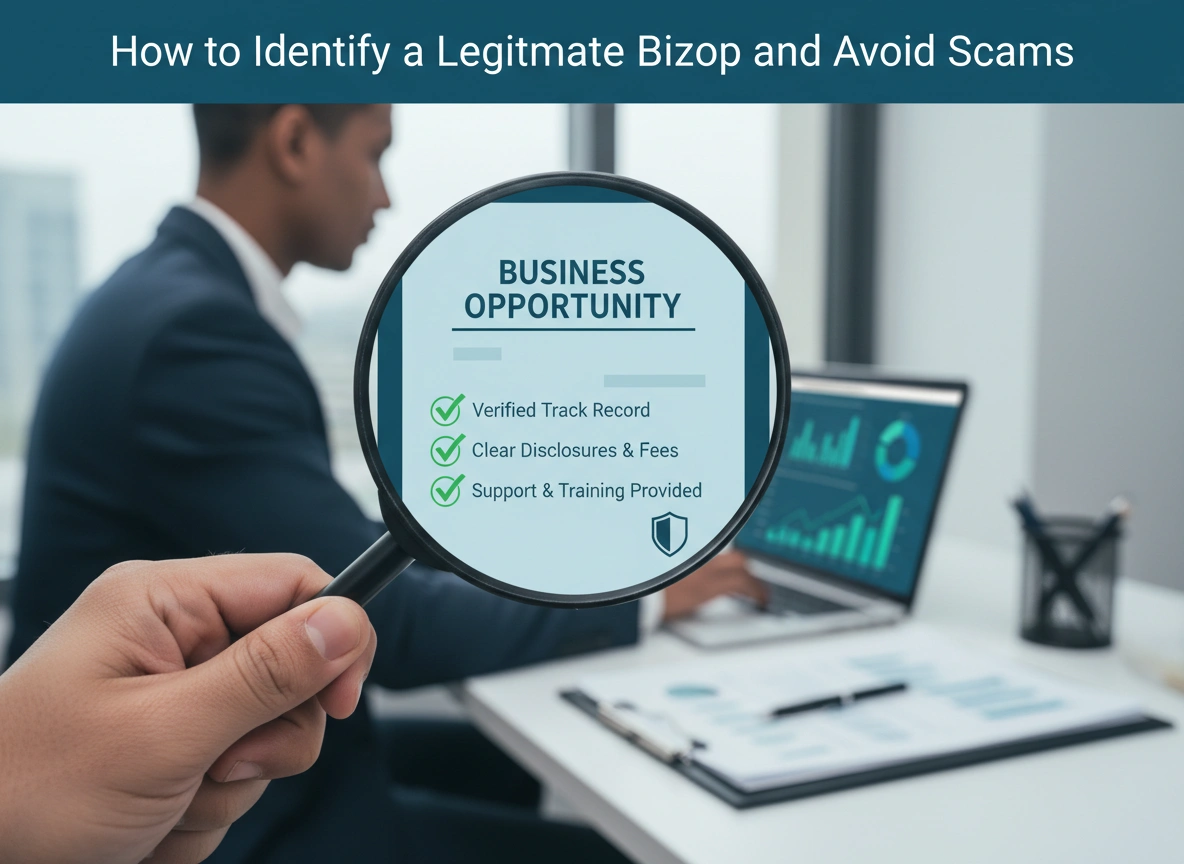
Distinguishing the good from the bad involves looking for positive indicators as well as negative ones. Legitimate business opportunities generally share several key characteristics that demonstrate transparency and viability.
Proven Track Record
A legitimate company will have a history. They can show you how long they have been in business and provide evidence of their market presence. While startups exist, a complete lack of history combined with high income claims is suspicious.
Realistic Earnings Disclosures
In many jurisdictions, specifically the United States, the Federal Trade Commission (FTC) enforces the Business Opportunity Rule. This requires sellers to provide a one-page disclosure document. Legitimate companies will provide realistic earnings claims, often accompanied by a statement detailing the percentage of participants who actually achieve those earnings. They will not shy away from telling you that success requires hard work.
Clear Product or Service Value
The core of a real bizop is a valuable product or service that has end consumers. Ask yourself: “Would anyone buy this product if there wasn’t a business opportunity attached to it?” If the answer is no, the product is likely just a prop for a pyramid scheme.
Support and Training
Genuine opportunities invest in their partners. They offer structured training programs, marketing support, and technical assistance. They want you to succeed because your success contributes to their brand reputation and revenue. Scams usually offer generic, low-quality PDF manuals and disappear once they have your money.
Steps to Verify a Bizop: Your Due Diligence Checklist
You’ve found an opportunity that looks promising. It has passed the initial “sniff test,” and you are ready to dig deeper. Use this step-by-step verification process before signing any contracts or transferring funds.
Step 1: Research the Company Online
Don’t just look at their website. Search for the company name followed by keywords like “scam,” “review,” “complaint,” and “lawsuit.” Look for independent forums where past participants discuss their experiences. Keep in mind that a few bad reviews are normal for any business, but a pattern of complaints regarding fraud or non-payment is a dealbreaker.
Step 2: Request the Disclosure Document
If you are in the U.S., ask for the required disclosure document mandated by the FTC. This document must include information about lawsuits, refund policies, and contact information for references. If the seller refuses to provide this or claims they are exempt when they shouldn’t be, walk away.
Step 3: Interview Past Participants
Ask the company for a list of previous purchasers or partners. A legitimate business should be willing to connect you with people who are currently running the business. When you speak to them, ask tough questions:
- How long did it take to recoup your investment?
- What is the daily workload like?
- Does the company provide the support they promised?
- Are there hidden costs I should know about?
Step 4: Consult a Professional
If the investment is significant, it is wise to have a lawyer or an accountant review the contract and the business model. They can spot legal loopholes or financial inconsistencies that you might miss. An objective third party is often the best defense against emotional decision-making.
Step 5: Check with Consumer Protection Agencies
Verify the company’s standing with organizations like the Better Business Bureau (BBB) or your local state Attorney General’s office. Check if there are outstanding unresolved complaints against the business entity.
What to Do If You’ve Been Scammed
Discovering you have been the victim of a scam is distressing, but taking immediate action can sometimes help recover funds and prevent others from falling into the same trap.
Stop All Communication and Payment
The moment you suspect fraud, cut off contact. Do not pay any additional fees to “unlock” your earnings or “pay taxes” on the nonexistent profits. Scammers often use a “recovery scam” tactic where they pose as a different agency promising to get your money back for a fee. Do not trust them.
Report the Fraud
File reports with relevant authorities immediately. This creates a paper trail and helps law enforcement track trends.
- United States: Report to the Federal Trade Commission (FTC) at ReportFraud.ftc.gov.
- State Level: Contact your state Attorney General.
- Platform Reporting: If the scam occurred on a social media platform or job board, report the profile and the listing to the site administrators.
Contact Financial Institutions
If you paid via credit card, contact your issuer immediately to dispute the charge. Explain that you were the victim of fraud and the services/products were not delivered as described. If you paid via bank transfer, contact your bank’s fraud department. While wire transfers are difficult to reverse, swift action increases your odds.
Monitor Your Identity
If you provided personal information like your Social Security number or date of birth, you are at risk of identity theft. Consider placing a fraud alert or freeze on your credit reports with the major credit bureaus (Equifax, Experian, and TransUnion).
Conclusion
The entrepreneurial spirit is a vital part of the economy, and legitimate business opportunities can be a fantastic vehicle for financial growth. However, the responsibility falls on you, the investor, to separate fact from fiction.
Remember the golden rule of bizops: Skepticism is your shield. Legitimate companies will welcome your questions and provide transparent answers. Scammers will rely on pressure, vague promises, and secrecy. By following the due diligence steps outlined in this guide—researching the company, demanding disclosure documents, and consulting professionals—you can confidently pursue opportunities that are worth your time and investment.
Protect your capital, do your homework, and build your future on a foundation of reality, not empty promises.
