


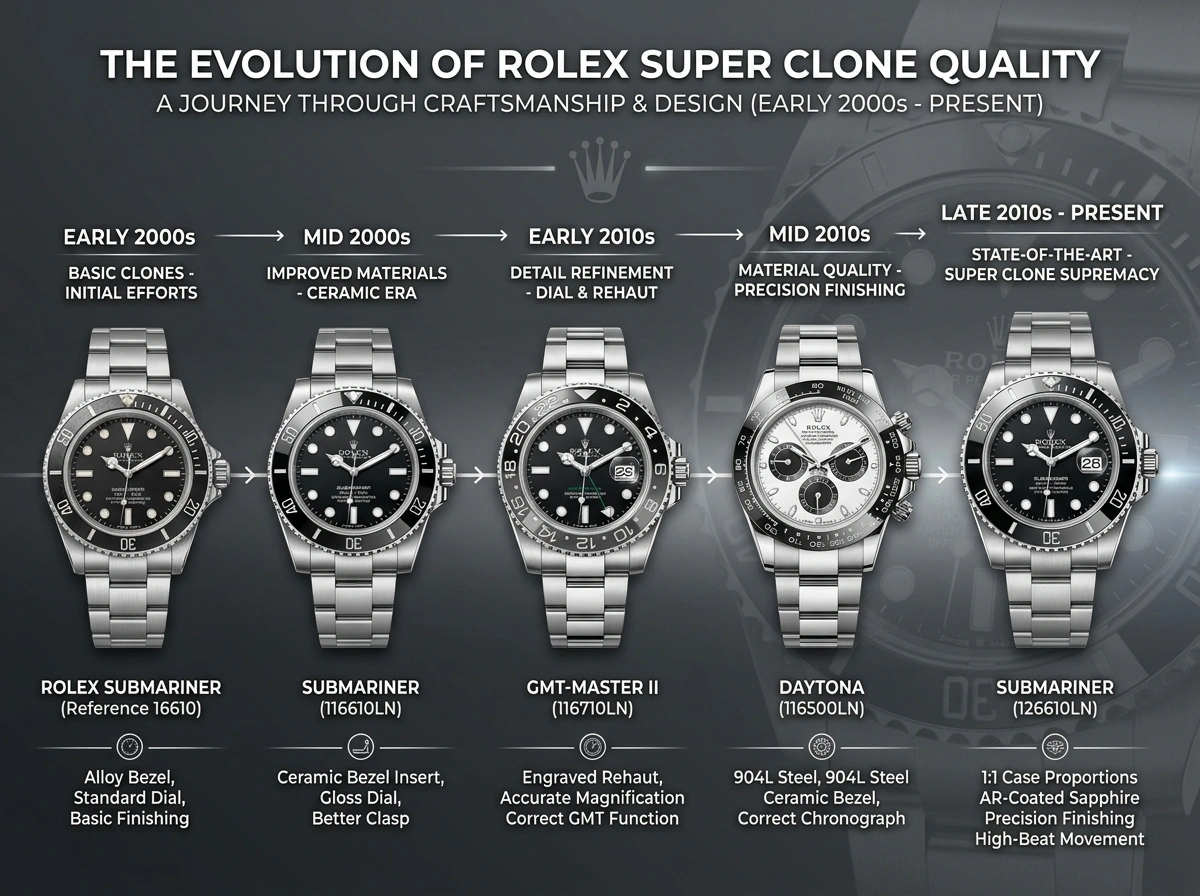
The replica watch market has come a long way. What once passed for a “luxury copy” decades ago bears little resemblance to the high-detail pieces produced today. For collectors and curious buyers alike, understanding this evolution helps set realistic expectations and sharpens the eye for quality.
In this article, we’ll trace how super clone Rolex watches have improved across several key areas: materials, craftsmanship, movement accuracy, and visual detailing. We’ll also look at how buyer expectations have shifted and what that means for anyone exploring this space. By the end, you’ll have a clearer picture of where these timepieces started and how far they’ve come.
The Early Days: Rough Edges and Obvious Flaws
Early replicas were easy to spot. Manufacturers focused on shape and branding, not precision. The goal was a quick visual match, and little else.
Cases were often made from low-grade alloys that discolored quickly. Dials looked flat, with misaligned text and uneven printing. Crystals scratched easily, and water resistance was practically nonexistent.
Inside, the movements told the same story. Cheap quartz or basic mechanical calibers powered most pieces. They kept rough time at best, and many failed within months. The weight felt wrong too—lighter than the genuine article and unconvincing in the hand.
Buyers back then knew what they were getting. The price reflected the limitations, and few people expected anything close to the real thing.
A Shift Toward Better Materials
The biggest leap forward came with materials. As manufacturing access expanded, replica makers began sourcing higher-grade components.
Stainless steel replaced flimsy alloys. Many modern pieces now use 904L-style steel finishes that resist corrosion and hold their shine. This single change improved both durability and feel.
Crystals also improved. Mineral glass gave way to sapphire-style crystals with better scratch resistance and clarity. Anti-reflective coatings, once absent entirely, started appearing on higher-tier pieces.
Here’s why this matters: materials affect everything. Weight, wear resistance, and the way light hits the case all depend on what the watch is made from. Better materials closed a noticeable gap between early replicas and their modern counterparts.
Craftsmanship and Finishing Details
Beyond raw materials, the finishing work has transformed. This is where attention to detail separates a passable copy from a refined one.
Case and Bracelet Refinement
Modern production pays closer attention to brushing, polishing, and the transitions between surfaces. Bracelet links now align more cleanly, and clasps feel more secure. Edges that once felt sharp or unfinished are smoother and more deliberate.
Dial and Hand Precision
Dial printing has improved dramatically. Text spacing, font weight, and logo placement are far more consistent than in earlier eras. Applied indices and properly shaped hands replaced the flat, painted markers of the past.
Lume application also advanced. Earlier pieces glowed weakly or unevenly. Newer ones apply luminous material more carefully, producing a cleaner, longer-lasting glow.
These details might seem small individually. Together, they define the overall impression a watch makes.
Movement Accuracy and Reliability
Perhaps the most significant improvement involves what’s inside the case. Movements have evolved from the weakest point to a genuine selling feature.
Early mechanical replicas drifted badly and stopped working without warning. Today’s higher-tier pieces use cloned automatic movements designed to mimic the layout and behavior of genuine calibers more closely.
Key improvements include:
- Better timekeeping: Many modern movements hold accuracy within a tighter daily range than older versions.
- Smoother sweep: The second hand glides more convincingly, matching the look of an automatic movement.
- Improved power reserve: Longer running times mean fewer interruptions in daily wear.
- Greater reliability: Tighter assembly tolerances reduce early failures.
This progress reshaped the market. When movements became dependable, buyers started treating these watches as wearable pieces rather than short-term novelties.
Visual Details That Define Modern Pieces
Visual accuracy has become the benchmark for quality. The closer a piece resembles its inspiration, the more refined it’s considered.
Date windows now feature better magnification and centering. Bezels rotate with cleaner clicks and align more precisely. Engravings on the case back and rehaut are sharper and positioned correctly.
Color matching has also improved. Dial tones, bezel inserts, and metal finishes are calibrated more carefully than before. Where early pieces showed obvious tint mismatches, modern ones aim for subtle accuracy.
For anyone researching the current landscape, resources covering the super clone rolex market can offer useful context on how these visual standards have tightened over time.
How Buyer Expectations Have Changed
As quality rose, so did expectations. Buyers today are far more informed than in previous decades.
People now research specific reference numbers, compare finishing details, and discuss movement types. The casual “good enough” attitude has faded. Many buyers expect a piece that holds up to closer inspection and daily wear.
This shift created pressure on the supply side. Manufacturers that ignore detail struggle to compete. Those investing in better materials, tighter assembly, and accurate finishing tend to earn stronger reputations.
What does this mean for you? If you’re exploring this space, set clear standards. Examine weight, finishing transitions, dial alignment, and movement behavior. Knowing what separates older, weaker pieces from refined modern ones protects your expectations and your money.
Common Mistakes Buyers Still Make
Even with better products available, some buyers fall into predictable traps. Avoiding these helps you make smarter decisions.
- Judging by photos alone: Images hide weight, finishing, and movement feel. In-hand details matter more.
- Assuming all pieces are equal: Quality varies widely between tiers and sources.
- Ignoring movement type: A convincing exterior means little if the movement underperforms.
- Overlooking aftercare: Even improved pieces benefit from proper handling and occasional servicing.
Keeping these points in mind keeps your expectations grounded in reality.
What the Evolution Tells Us
The progress in this market reflects broader manufacturing trends. Access to better tools, materials, and assembly techniques raised the floor across the board.
Pieces that once felt disposable now feel more considered. The gap between the cheapest and most refined options widened, giving buyers more choices at different quality levels.
Still, no replica is identical to a genuine timepiece. The goal of these products is visual and mechanical resemblance, not authenticity. Understanding that distinction keeps expectations honest.
Conclusion
The quality of super clone Rolex watches has changed dramatically over the years. Early pieces relied on rough materials, weak movements, and obvious flaws. Today’s higher-tier options feature stronger materials, refined finishing, and far more reliable movements.
Buyer expectations evolved alongside these improvements, pushing the market toward greater attention to detail. The result is a landscape that’s more sophisticated—but also more demanding of informed decisions.
If you’re exploring this space, focus on the details that matter: materials, finishing, and movement behavior. Take time to research, compare carefully, and set realistic standards. Doing so ensures you understand exactly what you’re getting and why it differs from everything that came before.
